
Persistence in Prayer

Perhaps one of the clearest examples of persistent prayer given to us given to us in the Bible is found in the Gospel of Luke. In the midst of teaching the disciples, Jesus uses a parable to instruct them on the importance of persistent prayer and God’s care for us. In Luke chapter 8, Christ tells the parable of the “Persistent Widow”.

Then He spoke a parable to them, that men always ought to pray and not lose heart, saying: “There was in a certain city a judge who did not fear God nor regard man. Now there was a widow in that city; and she came to him, saying, ‘Get justice for me from my adversary.’ And he would not for a while; but afterward he said within himself, ‘Though I do not fear God nor regard man, yet because this widow troubles me I will avenge her, lest by her continual coming she weary me.’

Then the Lord said, “Hear what the unjust judge said. And shall God not avenge His own elect who cry out day and night to Him, though He bears long with them? I tell you that He will avenge them speedily. Nevertheless, when the Son of Man comes, will He really find faith on the earth?””  Luke 18:1-8 NKJV

In this parable, Christ not only speaks to the disciples about the need for persistence in prayer, he also affirms God’s care for His people who persist in prayer and cry out to Him “day and night”. But there is another truth found in this parable that may be overlooked. Verse 8 concludes with a compelling, and perhaps rhetorical, question to the disciples. It is also directed at us.

Jesus draws a direct connection between the persistent prayer of His people…and their faith. He asks “When the Son of Man comes, will He really find faith on the earth?”  If Christ Jesus, our High Priest, were to return today, would we be a people that trust Him completely and remain persistent, steadfast and constant in praying without ceasing? Would our prayer life demonstrate a wholehearted, fervent, and persistent faith in Him?

“…persistence in our prayer life is a direct reflection of our faith in God…”

It is a truth born out in the lives of believers that persistence in our prayer life is a direct reflection of our faith in God who hears and answers our prayers. When the Son of Man comes, when Christ returns, will he really find His people, His church, you and I, a people whose faith is in God and that pray with persistence? Will we be a people that demonstrate a faith in God alone and that continue steadfastly in prayers like the early church in Acts 2:41-42 and that pray without ceasing (1 Thessalonians 5:17)?

As we persist in our prayers and do not strive to answer our own prayers in our own time, our own way, and in our own will, then we truly demonstrate our complete faith and trust in God to hear our prayers.

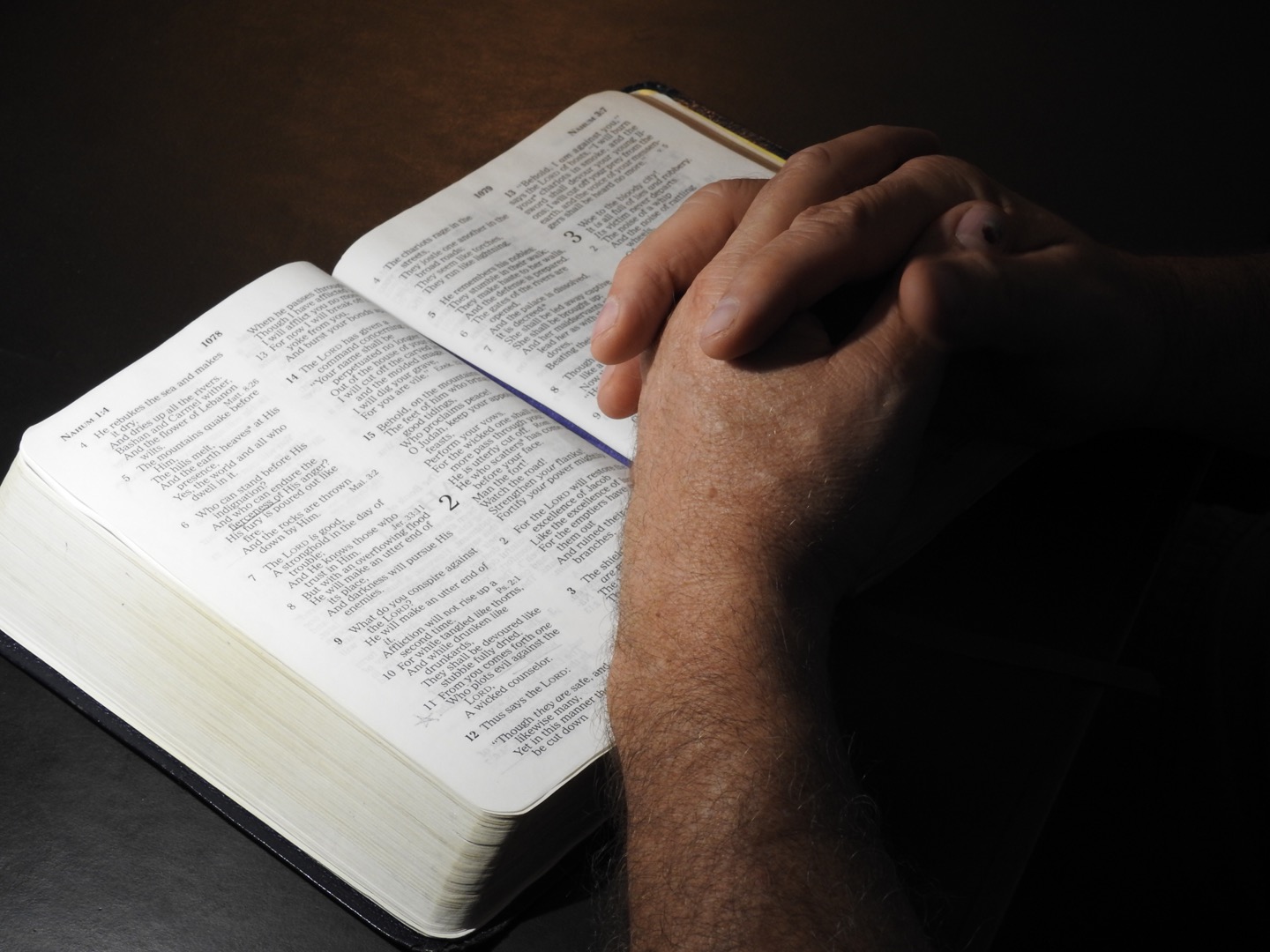
Plea, Praise & Promise

Ths Psalmist who wrote Psalm 119 concluded this amazing psalm with a passionate reminder to himself and a emboldened series of declarations to God regarding the truth and power of God’s Holy Word.

169 Let my cry come before you, O Lord;
    give me understanding according to your word!
170 Let my plea come before you;
    deliver me according to your word.
171 My lips will pour forth praise,
    for you teach me your statutes.
172 My tongue will sing of your word,
    for all your commandments are right.
173 Let your hand be ready to help me,
    for I have chosen your precepts.
174 I long for your salvation, O Lord,
    and your law is my delight.
175 Let my soul live and praise you,
    and let your rules help me.
176 I have gone astray like a lost sheep; seek your servant,
    for I do not forget your commandments.
” Psalm 119:169-176 NKJV

The psalmist lays bare the desires and condition of his heart as he uses words such as “cry“, “plea“, “praise“, “chosen“, “long for” and “sing“. He concludes this longest psalm with a simple but poignant petition to God, admitting his own lostness and desperate need to be found by his Lord. At the end of the psalm he writes “I do not forget your commandments.” Despite going astray and being in need of a shepherd to come and find him, he remembered the commandments of God.

Fast-forward centuries to the days of Christ and the apostle Paul. We read the words of Paul in Ephesians 6 telling us of the spiritual battle that all true believers are engaged in each and every day of their life here on earth. In that text, Paul writes that we are to “Stand therefore, having fastened on the belt of truth…” The term “fastened“, is sometimes translated “gird” or “girded“. The Greek word implies that the belt is an equipping of the Word of God, to be fastened securely, and an ever-present necessity to engage in spiritual battle.

When the psalmist wrote in verse 176 that he would “not forget” God’s commandments, he was conveying the importance of internalizing and personally applying the Word of God. Much like the psalmist, in the midst of our trials, our lostness at times, Paul commends us to endure all of the the battles that God permits to happen in our lives, with the belt of truth “fastened” firmly in our heart and the Word of God not forgotten, but remembered, desired and applied.

Gird…not a common word today. The image and purpose of a belt is most powerful. A belt does not have any gaps. It is drawn tightly and securely. It fully surrounds the body, holding fast those things that might otherwise fall down or fall off. It serves as a foundation form which other weapons and defenses can be placed and used. As we are girded with the belt of truth, we encompass ourselves with the entire truth of God. There is no part of our life that is not surrounded by the truth of God. Nothing is beyond the equipping of His truth. The truth is not only preparatory for battle, it is also foundational and assuring to us as we can have confidence in the faithfulness of God to work in and through His truth in our lives as we abide in Him and live for Him.

Gird yourself with His truth. Do not forget His truth. Cry out to Him knowing that His truth, His commandments, are good. Choose His truth. Praise Him for His truth. When you wander, as you abide, do so with the belt of His truth securely fastened and petition Him for His shepherding care.

In Christ

“So I prayed …”

The book of Nehemiah is a powerful, historical book filled with examples of biblical leadership, standing firm in God against opposition, as well as personal and community revival found in God’s Word.

One of the more powerful themes that runs throughout the whole book though, is the priority and persistence of prayer in the life of Nehemiah. As we read the story of Nehemiah, we of read prayers for success, prayers for wisdom, and prayers for judgment. Sometimes his season of prayer goes on for months. Other times we see him pray in-the-moment prayers that are silent, but powerful, petitions to the God of heaven for that specific situation and need.

As believers there are things that we may be burndened to pray about for decades. At other times, there are those things that happen unexpectedly that require our immediate attention, but that would be well served by that in-the-moment prayer to our heavenly Father.

James 1:5 says “If any of you lacks wisdom, let him ask of God, who gives to all liberally and without reproach, and it will be given to him.” Nehemiah, who found himself standing before the earthly king, took a moment to silently pray to the God of heaven. The prayer was not an afterthought, but an instinctive response that came from a lifetime of practice and a firm understanding of who God is. It also came from a deep-seated desire to see God’s will done in every moment and every decision of his life.

May we, like Nehemiah, develop that instinctive response to go to God in prayer in every moment of our days. Then, when that moment of crisis from something unexpected arrives, or that moment of need when we find ourselves in a state of desperation, or that precious moment where we get to share the Gospel truth of Jesus with someone else, we will respond as Nehemiah did… “So I prayed to the God of heaven.

Blessings in Christ…

The Blessing of Tear-bathed Prayers

The Lord is good, A stronghold in the day of trouble; And He knows those who trust in Him.” Nahum 1:7

Sometimes, our prayers are a heartfelt conversation with God as we seek wisdom and discernment. Sometimes, our prayers are a time spent sharing with God the burdens and desires of our hearts.

But sometimes…in those seasons of profound heartache, unimaginable misery, and complete helplessness, our prayers are brought before God bathed in the tears of sorrow and desparation.

I was recently with an incredible group of people that truly love and care for each other. As the very real burdens and trials of life were shared, and the weight of those trials was seen and heard in the voices and tears of those who were suffering, the eyes of many in the room were also filled with tears.

In Romans 12:15 it say that we are to “Rejoice with those who rejoice, and weep with those who weep.” It was a precious and vivid demonstration of the love of Christ being lived out in the lives of folks that not only wanted to come alongside others in their time of need, but they also knew the only One to turn to with these heavy burdens.

In John 11 we see that when Jesus came to the place where Lazarus was being kept after he died, He came upon Mary, Martha and the others weeping. Jesus did not simply raise Lazarus from the dead and move on, but rather Scripture tells us that Jesus wept alongside them. He was not weeping for the death of Lazarus, rather He was expressing one of the deepest levels of compassion by weeping alongside those He loved.

As we live our lives as believers with other believers, may we be Christ-like and weep with those who weep. In those most difficult of times, let our prayers be bathed in the tears of love and compassion as we call out to the One that knows us, the One we trust, the One who is our stronghold in the day of trouble.

Why do I have 9 arms?

Photo by J. Epperson

The nine armed sea star is a crazy looking critter. I recently had the delight of finding one while searching for sea shells with my son. I had never seen anything quite like it before. Unlike five armed sea stars (or star fish as I used to call them), it has nine arms that are used for feeding, digging, and moving around. Why nine arms and not five is beyond me. What I do know is that God, in his perfect design, chose to create them that way. This little critter obviously does not sit there and ask “Why do I have 9 arms?” It just lives and does what it was designed and intended to do and be.

As humans we are all created in God’s image and God has made us each as unique individuals. As believers we also know that we each have a unique role and purpose in this world and we need to be doing what He has called and purposed us to do. The way we understand His will and purpose for our life is to draw close to him, to dig in and study His word and pray.

Romans 12:1-2 gives us a crystal clear insight into how we go about knowing His will for our lives.

I beseech you therefore, brethren, by the mercies of God, that you present your bodies a living sacrifice, holy, acceptable to God, which is your reasonable service. And do not be conformed to this world, but be transformed by the renewing of your mind, that you may prove what is that good and acceptable and perfect will of God.

As we determine to be transformed by God, and not be conformed to this world, we are able to “prove” or know what God’s perfect will is. Let’s start asking God what he wants us to know about himself and get busy living our lives for Him!

Laboring in Prayer for One Another

Epaphras, who is one of you, a bondservant of Christ, greets you, always laboring fervently for you in prayers, that you may stand perfect and complete in all the will of God.” Colossians 4:12 NKJV

One of the amazing blessings and privileges we have as bondservants of Christ is to pray for one another. As Paul is wrapping up his letter to the believers at the church in Colosse, he includes remarks pertaining to the active work of the believers in the church to support and encourage each other.

Epaphras is only mentioned twice in Scripture, once here in the letter to the Colossians and also in Paul’s letter to Philemon. In this passage Paul specifically speaks of Epaphras as “…always laboring fervently for you in prayers, that you may stand perfect and complete in all the will of God.” What an incredible statement of the Christ-like character and behavior of Epaphras. His steadfast commitment to prayer for other believers is commendable all on its own. But Paul states the specific nature of Epaphras’ prayer stating that he was burdened to pray for more than just the day-to-day things that fill another believers days, but that these fellow bondservants would “stand“, or be completely confident, unwavering in their faith, and in the knowledge and purpose of living a life completely yielded to the will of God.

What an incredible blessing that must have been to be a part of the church in Colosse and to know that there is a fellow believer praying fervently for them that they might be living a confident, faith-filled life in the perfect will of God.

Perhaps this is something each of us can consider and commit to making a part of our personal prayer lives in the days ahead. Perhaps we can commit to pray for our own churches, for the fellow believers in our life, and perhaps even for a church that we used to attend. Perhaps we can pray specifically that they “…may stand perfect and complete in all the will of God.”

In Christ…Tim